Detection That Holds When Conditions Are Worst
As of October 16, the National Interagency Fire Center (NIFC) reported 64,718 wildfires nationwide this year, burning 9,028,873 acres. That is 32% more fires and 43% more acres burned than the ten-year average for this point in the year.
We know when conditions are dangerous. We don’t know where the next ignition will occur.
Red Flag Warnings provide advance notice of conditions that favor rapid fire spread. High winds, low humidity, and dry vegetation can turn a small ignition into a fast-moving wildfire.
During extreme fire weather, the window between ignition and rapid growth can be very short. By the time smoke is visible or a fire is reported, valuable opportunities for early intervention may already have been lost.
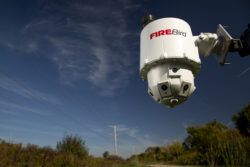
FIREBird detects the heat from a wildfire at the earliest possible stage. This gives first responders more time to locate an ignition, deploy resources, and potentially contain a fire before it threatens communities.
The goal of FIREBird isn’t simply to detect wildfires; it’s to detect them early enough to help change the outcome. Learn more about the FIREBird system.
Last week, the Bryson, Henderson, and Norte fires ignited within a day of each other during strong Santa Ana winds across Southern California, requiring responses in Los Angeles, San Diego, and Orange counties. The Norte Fire damaged or destroyed seven homes. We thank the firefighters and emergency personnel who responded, including those injured on the line, and our thoughts are with the families whose homes were affected.
FIREBird Should be Part of An Overall Detection Strategy
No single detection technology should be the only line of defense.
The FIREBird system adds a ground-based thermal detection layer, identifying heat signatures rather than relying solely on visible smoke. FIREBird provides exceptional detection and response capabilities today, particularly in high fire hazard areas where an ignition could threaten the wildland-urban interface. Adding FIREBird to your community complements satellite monitoring and optical camera networks. This layered approach provides overlapping coverage, improved situational awareness, and reduced dependence on any single method.
How Can Lindsey Help Your Community?
We work with fire departments and municipalities to identify high-risk areas and strategically deploy FIREBird networks where they can strengthen detection coverage and support faster emergency response, including in vulnerable communities, along arson watch routes, and throughout the wildland-urban interface.
Across our deployed network, every FIREBird unit exposed to Santa Ana wind events and public safety power shutoffs has continued operating through those conditions, maintaining monitoring for first responders when risk was highest.
If your fire department or community is evaluating its wildfire detection coverage, we’d welcome the opportunity to work with you.
Reply to this email msobolewski@lindsey-usa.com or call 917-513-8456.